
Here’s the thing. If you spend time on Solana, you already know the feed moves fast and sometimes it feels like drinking from a firehose. NFT drops, token listings, and wallets shifting huge positions pop up in feeds every minute. Initially I thought every explorer was just window dressing, but after a few painful mistakes and one near-miss on a rugged launch I started treating the right tools like safety gear—seriously, they matter. I’m biased, but this is about working smarter, not harder, and avoiding rookie costs when a single transaction tells the whole story.
Whoa! A good NFT tracker shows mints, transfers, and owner history almost instantly. You want on-chain timestamps, mutable vs immutable metadata flags, and filters for marketplace or program account activity. On Solana that means parsing logs from Metaplex and Candy Machine, pulling token metadata either on-chain or from a hosted URI, and correlating that with marketplace trades so you can spot wash trading or accidental burns before you bid. My instinct said this was overkill for casual users, though actually it saved me from a bad purchase once.
Seriously? A blockchain explorer is not just a pretty interface. It should give you breadcrumbs: raw transactions, decoded instructions, and slot confirmations. When someone says “check the block,” they mean look at inner instructions, verify program IDs, and examine log messages because sometimes a hidden error reveals intent or a failed preflight that matters for provenance. Something felt off about relying only on high-level summaries, so I cross-check raw RPC output when uncertain.
Hmm… token trackers need to handle SPL tokens, wrapped assets, and program-derived accounts gracefully. You want to see holder concentration, mint authority status, and whether a supply is fixed or mintable. This requires polling the token program state, inspecting the mint account fields like decimals and freeze authority, and reconciling on-chain amounts with off-chain oracles—otherwise charts can mislead you. I’ll be honest—this part bugs me when explorers hide raw data behind slick visualizations.
Okay, so check this out—I’ve run Solscan side-by-side with the native Solana Explorer and a couple of analytics dashboards for real investigations. Each tool has trade-offs: one is faster, another exposes inner logs more clearly, a third gives alerts and historical holder snapshots. My workflow starts with a quick lookup to decode the tx and token mint, then a raw RPC fetch if anything smells weird, and finally a market check for liquidity and slippage exposure. If you want a practical starting point, try a trusted explorer and poke around a few recent mints to see what I mean.
How to use an explorer without getting fooled
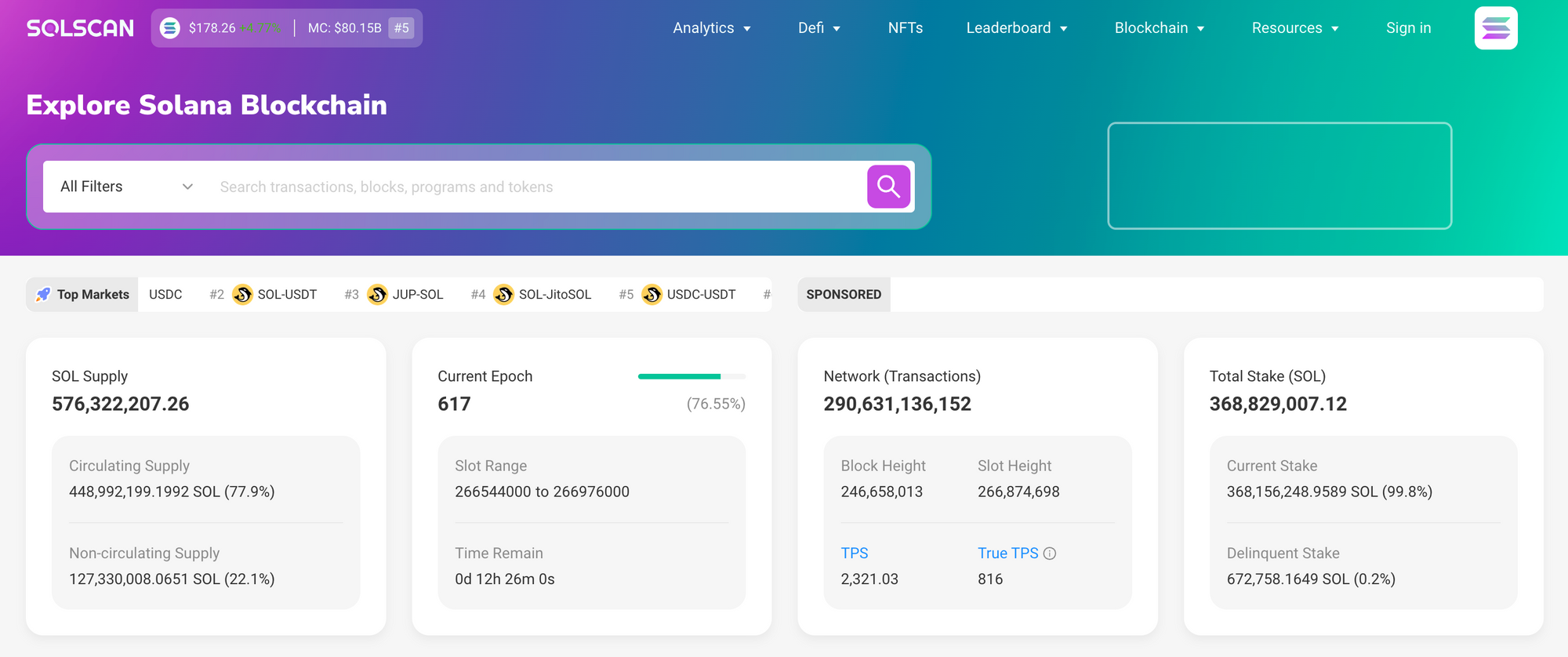
Wow! The single most useful habit is cross-checking: decode the transaction, inspect inner instructions, and verify the signer list. For Solana that usually means checking program IDs associated with the mint (Metaplex or otherwise), confirming the mint authority, and validating the metadata account address. For a hands-on look, I recommend starting with the solscan explorer official site to learn how decoded logs and token pages are presented; it helps you learn the patterns quickly. Initially I assumed on-chain metadata was always reliable, but then I saw metadata pointers referencing stale JSON and realized you need to validate URIs too. Actually, wait—let me rephrase that: metadata is a great signal, but it can be manipulated if you don’t confirm the mint account and verify the program flow.
Really? Alerts and watchlists are where you go from passive browsing to proactive monitoring. Set alerts on mint activity, sudden holder concentration changes, and large transfers out of key wallets. Webhooks or tiny serverless scripts can notify you the moment a wallet you follow moves a large balance or when a new token has unusually high initial holder concentration. On one hand alerts save time, though on the other they can trigger too often unless you tune thresholds—so expect some noise while you refine them. My quick tip: start with higher thresholds and decrease them as you learn normal behavior.
Wow! Automation is underrated for retail users. Simple scripts calling RPC /getSignaturesForAddress and /getTransaction can be cheap and fast if you use regional RPC nodes and respect rate limits. Building a small indexer that caches token metadata and updates holder counts every few minutes will outpace manual checks, and it helps surface anomalies like sudden new mints from the same deployer. I’m not 100% sure your first bot will be perfect—mine wasn’t—so plan to iterate. Also remember to account for reconciling fractionalized or wrapped tokens which can look weird at first glance.
Hmm… provenance is everything in NFTs. Look for consistent creator addresses, check royalty settings in the metadata (when present), and compare multiple transactions across marketplaces to see if a piece has been relisted or flipped rapidly. When you see a mint with two or three initial holders and then a flood of listings, ask why—sometimes it’s coordinated market-making or airdropped insider allocations. One of my early aha moments was spotting symmetric transfers that indicated wash trading; that saved me from bidding on a fake “floor” pumped by a small group.
Whoa! Wallet behavior tells stories: repeated small transfers to many addresses, sudden staking or lockups, or new accounts that only receive airdrops are all red flags. Use holder distribution charts to spot concentration risks (one wallet owning 40% of supply is not a healthy distribution). If you see a frozen mint authority or a confirmed burn event, that changes the risk calculus quickly. On the flip side, verified marketplaces and on-chain royalty enforcement (where available) add confidence, though royalty enforcement is not universal across all Solana marketplaces yet. My advice: treat distribution and authority checks as non-negotiable.
Really? On the infrastructure side, RPC nodes and rate limits are the constant headache. Choose a combination of public and paid RPCs, and consider caching decoded transactions to avoid repeated expensive calls. Pagination matters too: when you request transaction histories, load in chunks and deduplicate by signature—otherwise you’ll miss things or get inconsistent snapshots. Something about building that first reliable pipeline feels like plumbing work—unsexy but absolutely critical. Also (oh, and by the way…) plan for occasional forks or slot reorgs; they happen and you need to reconcile state after them.
Hmm… one practical script I use is a three-step check: look up tx decode, fetch mint account details, and snapshot top 10 holders. It takes under a second per token with a good RPC and catches most obvious scams. If any step produces unexpected output—like unknown program IDs or metadata URIs pointing to disposable hosts—I flag it and dig deeper. On one hand this is manual heavy lifting; on the other it’s the fastest way to avoid common traps. My pattern isn’t perfect, but it’s saved me from very very expensive misreads.
Wow! Local context matters—events in US marketplaces and DEX listings often ripple quickly into global price action. Think of New York or Silicon Valley collectors spotting a drop and moving first; that speed amplifies noise and liquidity signaling. I’m biased toward early cross-checks during high-volume hours because slippage and bids move faster then. You don’t need to be constantly glued to a terminal, but you do need the right alerts and a clear checklist to run when something interesting pops up. Somethin’ like that will change your approach overnight.
Common questions
How do I verify an NFT’s true creator?
Check the mint account, the metadata creator array, and related program IDs in the decoded transaction. Then cross-reference marketplace creator badges and any social proof (official announcements, linked Twitter/X profiles). If the mint authority is unchanged and the creator address is consistent across mints, that’s a strong signal—though not a guarantee.
What are the quick red flags for a suspicious token?
High holder concentration, active mint authority, metadata pointing to ephemeral hosting, and unusual on-chain instruction patterns are big red flags. Rapid listings across wallets or identical sale prices in tight windows often signal wash trading. Always check raw logs for unexpected program calls.
Can I rely on a single explorer for critical decisions?
No—use multiple sources. Start with a readable explorer for speed, then validate with raw RPC calls or another explorer to confirm decoded logs and account states. It’s extra effort, but it prevents mistakes that look small until they hit your wallet.